

.jpg?width=2048&height=1365&name=OG100092%20(2).jpg)
With 17 panels and more than 100 speakers across three days, the B.C. Pavilion at Web Summit Vancouver 2026 delivered illuminating and impactful conversations on the current state and future state of various tech sectors in B.C. The discussions ranged from AI infrastructure and drug discovery to ocean intelligence, Indigenous technology, quantum computing, and clean energy. And though the technologies were varied and the sectors diverse, several themes surfaced again and again. For founders looking to scale, investors searching for opportunities, and organizations preparing for the next wave of innovation, these six signals point to where B.C. and Canada may be headed next:
1. The Conversation Has Shifted from “AI Is Here” to “This Is What AI Is Enabling”
One of the clearest shifts at Web Summit was the move away from treating AI as a standalone disruptor and, instead, showing what it can enable. Across healthcare, agriculture, mining, clean energy, ocean technology, public safety, and legal services, AI is becoming part of broader strategies to create faster, smarter, and more scalable solutions. As Handol Kim of Variational AI put it, “AI is an ingredient, not the dish,” referring to the company’s generative AI platform, Anki, which is trained on patented, published, and approved drugs to help create novel molecules and accelerate drug discovery.
That same pattern appeared in climate resilience. The Honourable Evan Solomon, Minister of AI and Digital Innovation, highlighted SenseNet as a practical example of AI protecting communities: “Today SenseNet combines AI, ground sensors, cameras, satellite data, real-time modeling to detect wildfires earlier, including in the smoldering phase, and help communities and critical infrastructure respond faster.”
AI-enabled solutions were not limited to established tech companies either. At Innovate BC’s BC Founder Faceoff: $10K Pitch Competition, several scaling small and medium-sized businesses (SMEs) featured AI in their business models. Matt Canzer, founder of Butterfly Legal, described his solution’s AI helper this way: “Bella is an AI assistant trained to behave like a legal assistant” — one that “organizes the case, puts the evidence together, and keeps everybody on track to keep the file moving forward.” Stephanie Brown, founder of Gigs Up, described her AI-powered model similarly: “We are 90% tech, 10% human…. Our platform enables personalized guidance at scale, with the option for human-in-the-loop guidance.” Together, these innovators show that the conversation has moved beyond what AI is and onto what it can do.

2. The Appetite for AI Training and Adoption Is Strong
Compute — the processing power and infrastructure needed to train and run AI models — was a major focus at Web Summit. Panels explored how Canada, B.C., and the broader tech ecosystem are accelerating AI and compute infrastructure through new business solutions, government funding, and investment opportunities. They also underscored strong demand for training and resources as organizations move from curiosity to adoption.
Minister Solomon, for example, said the AI Compute Access Fund — a federal program designed to help SMEs access and fund the computing power needed to develop, train, and scale AI applications—was oversubscribed shortly after opening. Meanwhile, other speakers repeatedly pointed to growing adoption across industries and a shift from exploration to implementation. David Gratton of 01S (Zero One Shift) said organizations are becoming more comfortable with Agentic AI, noting that “the dialog has changed” and that “people are understanding the lexicon and the tooling has gotten a lot better.” After a year spent “training, deploying with a number of companies,” he said adoption is beginning to spread beyond software development into commercial sectors such as real estate.
3. Sovereignty and Intellectual Property (IP) Are Now Innovation Strategies
If one word appeared across almost every sector, it was sovereignty. The term surfaced in conversations about compute, energy systems, Indigenous governance, intellectual property, data ownership, and supply chains.
The concept emerged most directly during Minister Solomon's opening remarks, where he tied Canada's AI ambitions to a broader strategy of technological independence. As he put it, “sovereignty matters,” adding that, in AI, “the data and the infrastructure are central to our strength.” Similarly, Jeff MacMillan, CEO of Gekko, argued that Canada must “make sure first and foremost that we have the capabilities that our country needs.” He described sovereignty not only as protection from outside interference, but also as the ability to innovate independently: “We want to have the ability to do the things we want to do that others might not be able to do,” referencing quantum technology as an example.
When Intellectual Property was discussed, Jen Mielguj, Director of IP and Partnerships at Digital, Canada’s Global Innovation Cluster, emphasized how IP ties into sovereignty because it carries “thought leadership” and “mobilization,” while also being “part of revenue generation.” She emphasized the “the importance of retaining the ownership of that… and also then of course, the monetization of it.”
4. Indigenous Innovation Blends Heritage, Tradition, and Technology
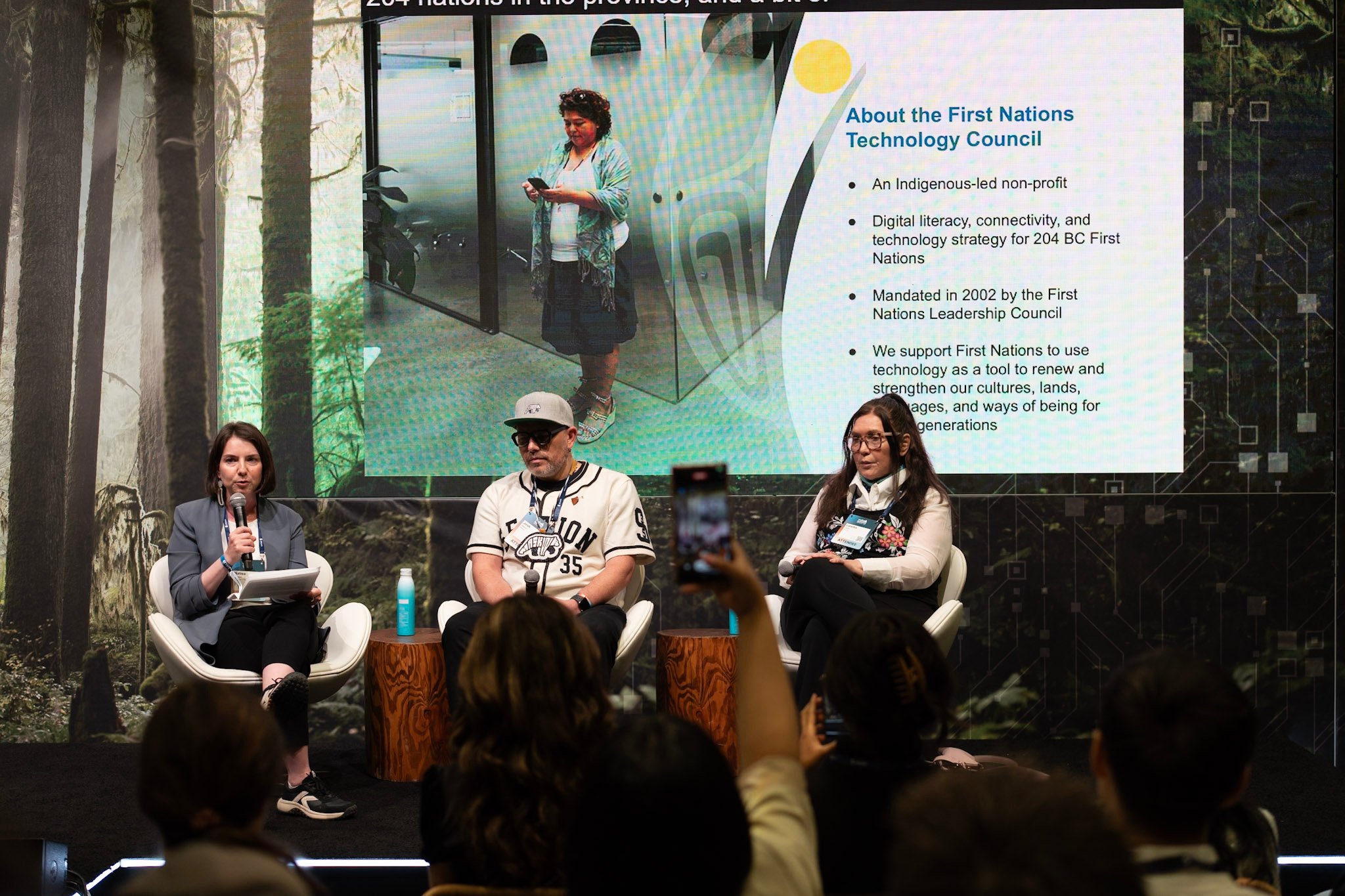
Some of the Pavilion’s most thought-provoking discussions came from Indigenous leaders and innovators. They explored how technology can support Indigenous stewardship, language revitalization, governance, and long-term accountability.
Josh Nilson, President of Maskwa Games, described how game technology is being used to preserve and revitalize Indigenous languages: “We thought how better to connect language, but bring it to platforms where youth could build on it and we could disrupt how we learn language.”
In particular, Maskwa Games is applying technology to support the survival of Michif, a language with few fluent speakers remaining in some dialects. By building language experiences within game environments, the company is meeting younger generations where they already spend their time.
Loretta Todd, founder of IM4 Lab, extended the conversation to AI and data sovereignty, arguing that Indigenous communities can decide how their knowledge is used and shared. “You don’t have to put that knowledge out into the world,” she noted. “AI can stay within your community, and you can choose whether it goes out or stays in.”
5. Investors Seek a Long-Term Vision, not Just a Product
Canada’s research strengths are well known. The question raised repeatedly during Web Summit was whether Canada can do a better job turning those strengths into long-term, globally scalable companies.
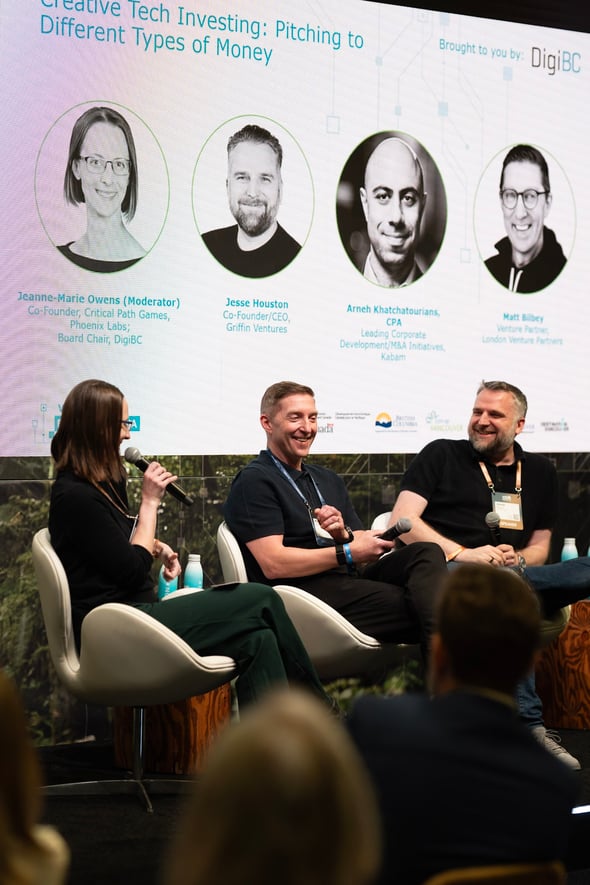
Matt Bilbey, Venture Partner at London Venture Partners, highlighted how investors increasingly evaluate long-term company-building potential rather than just individual products: “We're looking for your vision for your company because over an 8- to 10-year period, you'll make multiple games.” He added: “Sell me on your vision for yourself, why you're unique and your vision for your company. Don't just tell me about the game you're releasing.”
For many speakers, the next phase of Canada’s innovation economy will depend less on generating new ideas and more on creating the conditions that allow those ideas to scale into globally competitive businesses.
6. Trust and Transparency Are Paramount in Emerging Tech Deployment
Across multiple sectors, trust and transparency emerged as essential conditions for technology adoption. The strongest companies were not just talking about technical performance; they were showing how they build confidence with customers, communities, regulators, and partners.
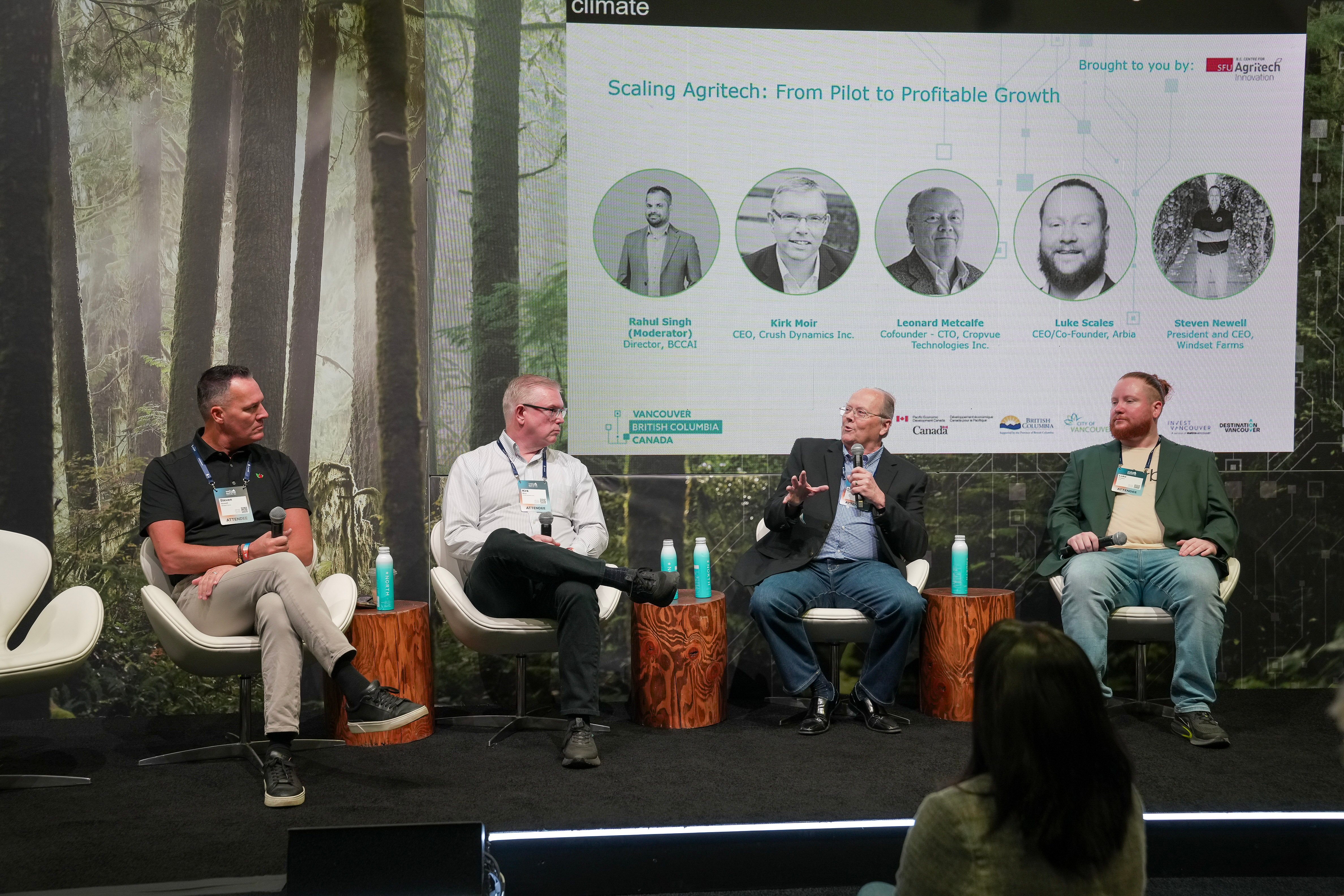
In agritech, speakers emphasized that growers often operate on tight margins, long sales cycles, and high-risk seasonal decisions. That means new technology has to earn credibility before it is adopted. One agritech discussion framed trust as a practical business requirement: “Trust is that ROI is real, not just modeled,” adding that customers also need confidence that “that vendor will be there next season.”
The same point surfaced in Indigenous data and consultation. Knowledge Keeper, a First Nations community intelligence platform that was a finalist in the pitch competition, positioned trust as a response to one of the most persistent barriers in development and consultation: poor information. As he put it, “At the core of every conflict with First Nations people and development is a lack of information,” adding, “It doesn’t need to be conflict. It can be partnership.” The platform’s model, which includes Indigenous data validation and OCAP principles — Ownership, Control, Access and Possession — shows how transparency and data governance can become the foundation for more respectful partnerships.
Middle Ground, another pitch participant, showed how AI can support trust-building by reducing administrative burden rather than replacing human engagement. The company’s AI-powered consultation workspace automates the extraction and organization of information from complex records, freeing teams to focus on “building relationships and earning trust.” That distinction matters: in sensitive, high-stakes projects, AI’s value is not just speed, but its ability to create more time and structure for better human decision-making, engagement, and accountability.
For founders, investors, and innovation leaders, these signals offer more than a snapshot of current trends—they provide a roadmap for where opportunities are emerging and where B.C. is positioned to lead.
The Road from Web Summit: See How You Can Leverage the Event Now and in 2027
Want to learn more about what happened at the B.C. Pavilion at Web Summit Vancouver 2026? Watch our recap video here.
Ready to make the most of B.C.’s innovation ecosystem and Web Summit Vancouver in 2027? Explore the latest opportunities, programs, and ways to get involved in our Road from Web Summit:
Share

Bigger, Bolder, Better: B.C. Innovation Reaches New Heights at Web Summit Vancouver 2026
B.C. Innovation Takes Centre Stage at Web Summit Vancouver