
Technology is transforming sectors across British Columbia, empowering industries to stay competitive, productive and future-ready. In this success story series, we’re exploring how B.C. farms are leveraging innovative technologies to solve challenges, drive growth and unlock new opportunities.
B.C. farmers looking to grow their businesses amidst rising costs have been receiving support through the BC On-Farm Technology Adoption Program (BCOFTAP) which is helping them access new technologies – such as robotic and automated equipment, farm management software, and digital sensors – that can improve their operations and boost production, efficiency, and profitability.
Since launching in 2023, BCOFTAP has awarded a total of $6.4 million across 134 projects to support farmers and producers in investing in new equipment. A fourth intake is now open until April 6, 2026, with an additional $2.5 million available to support the adoption of labour-saving technologies.
The program is delivered by Innovate BC and funded by the governments of Canada and British Columbia, through the Sustainable Canadian Agricultural Partnership, a federal-provincial-territorial initiative.
Through the second intake of BCOFTAP, Quik’s Farm, a flower growing operation located in Chilliwack B.C., received $100,000 to support them in purchasing an automated soil blocking system. The system, with a full project cost of approximately $1.8 million, was adopted with the goal of improving propagation efficiency, reducing labour demands, and enhancing overall crop quality.
For floriculture farms like Quik’s Farm, one of the biggest challenges is the labour-intensive nature of propagation. Producing flowers such as chrysanthemums requires each plant to be grown from a cutting, a process that traditionally involves significant manual handling, coordination between workers, and repetitive physical tasks. As operations scale, these inefficiencies can lead to increased labour costs, inconsistent product quality, and added strain on workers.
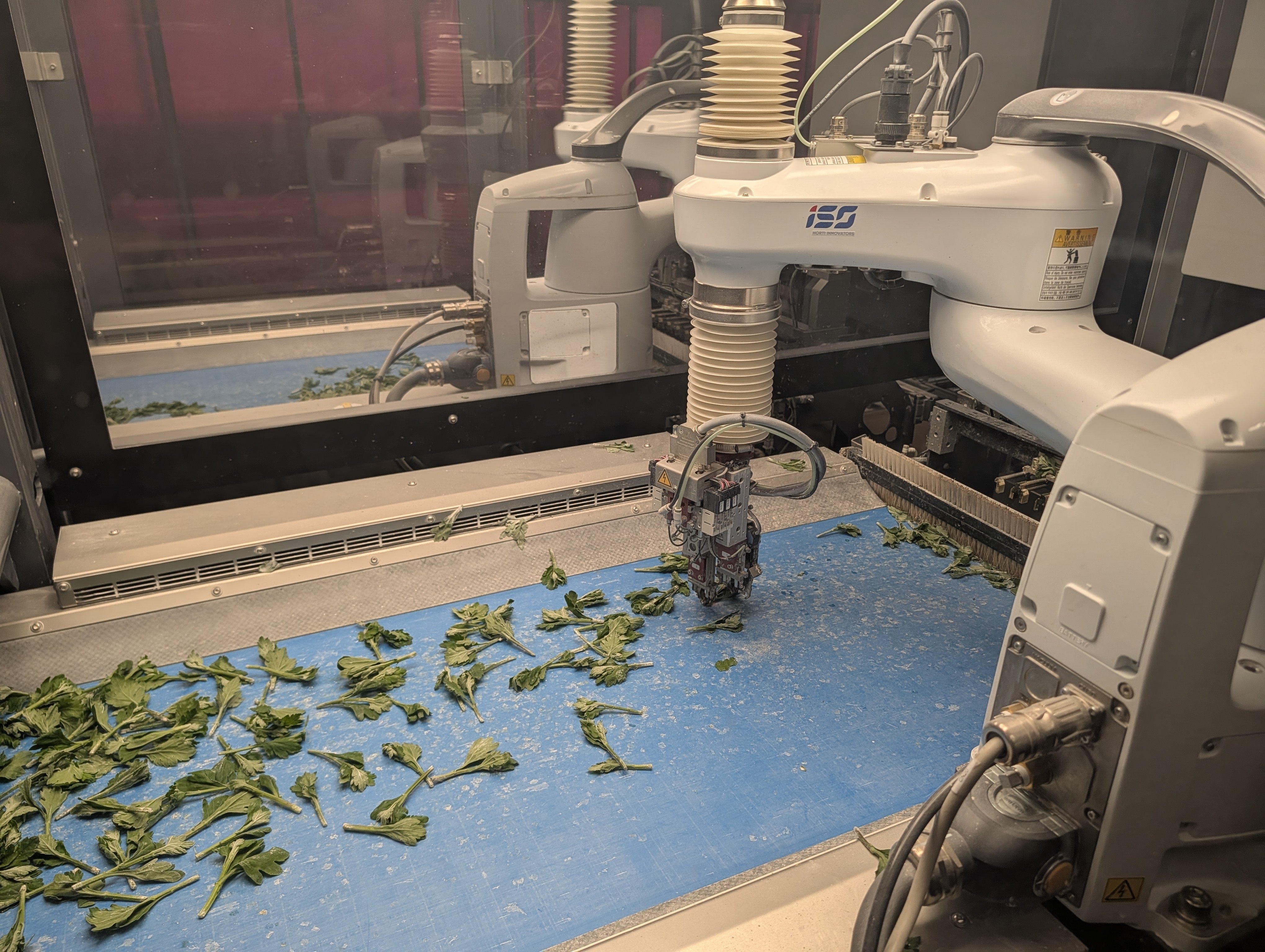
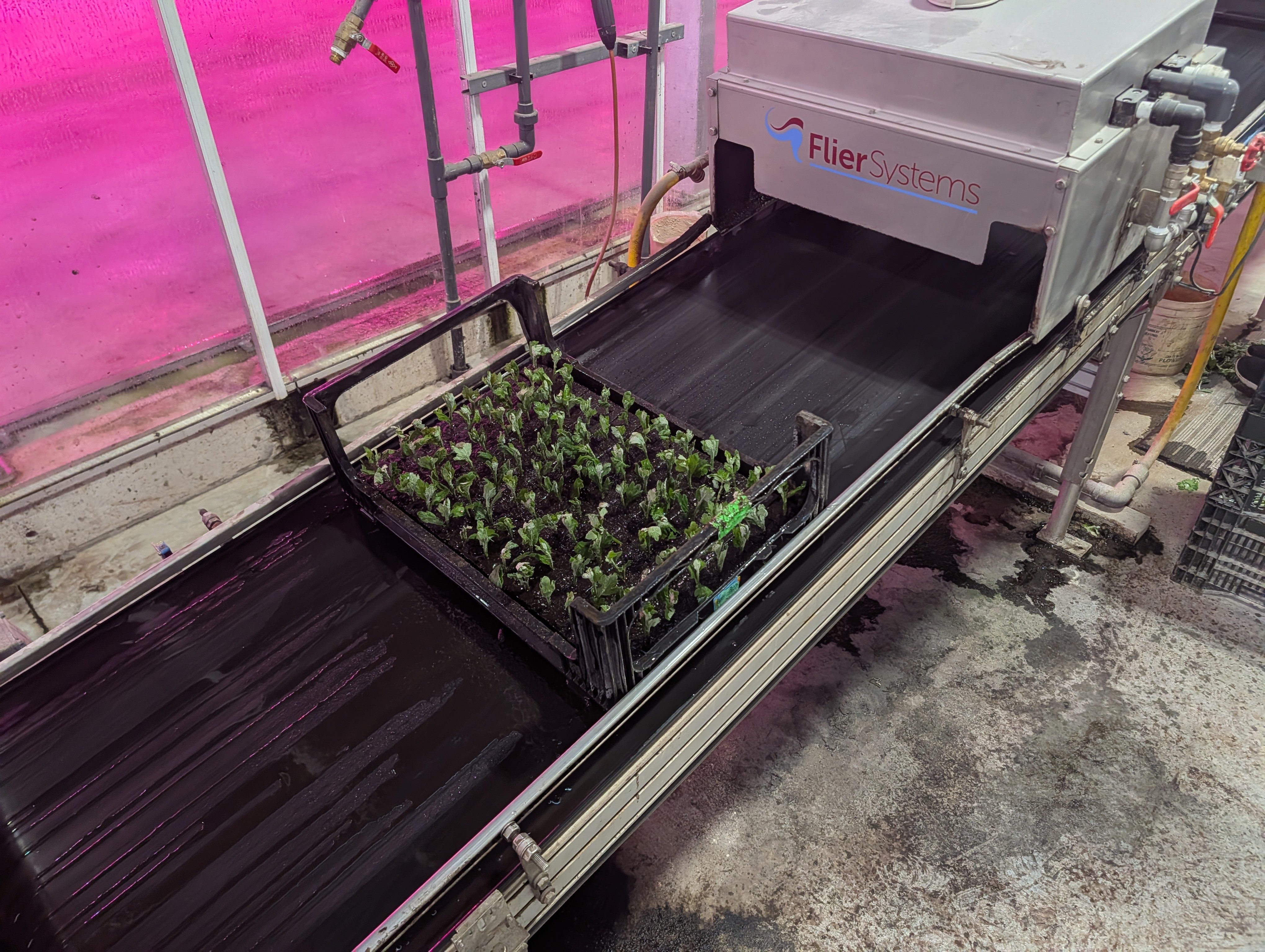
To help tackle these challenges, Quik’s Farm utilized funding support through BCOFTAP to adopt an automated soil blocking and propagation line, including a soil blocking machine, peat handling system, and internal transport system. This technology produces uniform, shape-retaining soil blocks and automates the sticking and movement of trays throughout the propagation process. By integrating this system, Quik’s Farm could streamline workflows, significantly reduce manual handling, and improve consistency across their crops. The automated process also minimizes variability in how cuttings are handled and planted, supporting more uniform growth and enabling the farm to scale production more efficiently while maintaining high-quality standards.
We sat down with Wim Oudhuis, Quik’s Farm’s General Manager, and Amanda Li, the farm’s Financial Controller/Executive Assistant, to learn more about their farm and the challenges they’ve faced, and how adopting new technology with the support of the program has impacted their operations.
Tell us about your farm, what do you do?
Wim: We grow a variety of cut flowers that we sell to wholesalers through the flower auction in Burnaby, and we also make our own bouquets that go directly to supermarkets. Our main crop is chrysanthemums.
We’ve been doing this for over 35 years, and we’ve been very successful. Whenever the market was good, we expanded—building more and more greenhouses. But the reality with chrysanthemums is that every single flower we harvest has to be propagated from a cutting. You take a cutting, stick it into a block in a tray, propagate it for about two weeks, and then plant it in the greenhouse. About nine weeks later, it’s ready for harvest—and then the whole cycle starts again.
As we kept expanding production, we didn’t properly scale how we handled propagation. It eventually became very inefficient, and we realized it wasn’t sustainable anymore. That’s why we decided to build this new facility and do it properly.
What challenges or opportunities have you faced where technology could provide support?
Wim: Propagation and handling were our biggest challenges. Each tray holds around 100 plants, and we calculated that a single tray was being handled eight or nine times before it even made it to the greenhouse. Now, with automation, trays are only handled twice—once when we put the empty tray on the system, and once when it’s ready for planting.
There was also a lot of human variability. For example, when multiple workers were sticking cuttings, they all had to move at the same speed. That didn’t always happen, and mistakes could occur—like mixing different flower varieties in the same batch. We even had situations where stacks of trays would fall over during transport.
Amanda: Yeah, with people working in a chain, everyone has to stay at the same pace, which is hard to control. If one person is slower, everyone else has to wait.
There’s also quality variation. The cuttings are very delicate, and if someone applies too much pressure, they can damage them. With the machine, it uses consistent pressure and sensors, so every cutting is handled the same way. That gives us much more even and reliable quality.
How has the BCOFTAP funding helped your farm?
Amanda: The funding was definitely very helpful and it came at a really crucial time. We had to take out loans and deal with high interest rates, so the funding helped ease that financial burden. It also gave us confidence—knowing that the government is supporting agriculture and innovation like this. That non-financial support is just as important.
How has the technology you adopted impacted your operations?
Wim: It has made our operations much more streamlined. Before, we had 10 to 15 people working on propagation, often pulling them away from other parts of the greenhouse just to get the job done. Now, we have a dedicated cutting and sticking crew of about one and a half people, and the rest of our team can stay focused on production.
We were also able to expand our production space because we’re using our labour much more efficiently. Importantly, we didn’t lay anyone off—those workers were absorbed into other parts of the operation where they can contribute more value.
It also reduced a lot of the chaos during peak periods. For example, around Mother’s Day, we might go from harvesting 100,000 flowers in a week to 500,000. At the same time, we need to prepare the next crop. Before, that meant constantly pulling people in and out of different tasks—harvesting, picking cuttings, sticking—leading to long days and inefficiencies. Now, the process is much more controlled.
What has been the biggest benefit of this technology to your farm?
Wim: The biggest benefit is the overall quality of the product. It’s much more consistent and noticeably better.
Amanda: We’ve also been able to diversify our revenue. Because of the improved quality and consistency, we can now sell cuttings, which we couldn’t do before. So, in addition to labour savings and better quality, we’ve created a new revenue stream.
Wim: That wasn’t something we expected. We actually had to relearn how to select cuttings, because the machine is more precise than a human. That pushed us to meet a higher standard, which is what allows us to sell them now.
What does adopting this technology mean for your customers or consumers?
Wim: For customers, it means a more consistent and higher-quality product. It might not always be obvious to the average consumer, but within the industry, the difference is clear.
How does new technology or innovation support the farming sector here in B.C.?
Wim: Technology is essential for staying competitive, especially in industries like floriculture where we’re competing with countries like Colombia and Ecuador. If we don’t keep innovating, it simply becomes too expensive to produce here.
It also makes the work easier. Some of these jobs are physically demanding, and technology can take a lot of that strain away. For example, when I first started, I spent my days lifting hundreds of crates—each about 7.5 kilos—bending over and loading them manually. Now, I can use a machine to pick up 60 at a time and have them palletized automatically. That kind of improvement makes a big difference, not just for efficiency, but for the people doing the work every day.
To learn more about Quik's Farm, visit https://quikfarm.ca/
To learn more about the BC On-Farm Technology Adoption Program, visit www.innovatebc.ca/programs/bc-on-farm
To learn more about the Sustainable Canadian Agricultural Partnership, visit www.agriculture.canada.ca/en/department/initiatives/sustainable-canadian-agricultural-partnership
BC On-Farm Technology Adoption Program in the news:
- https://www.biv.com/sponsored/heres-how-bcs-farming-operations-are-modernizing-10943210
- https://techcouver.com/2026/01/05/technology-adoption-program-farms-bc-modernize/

Share
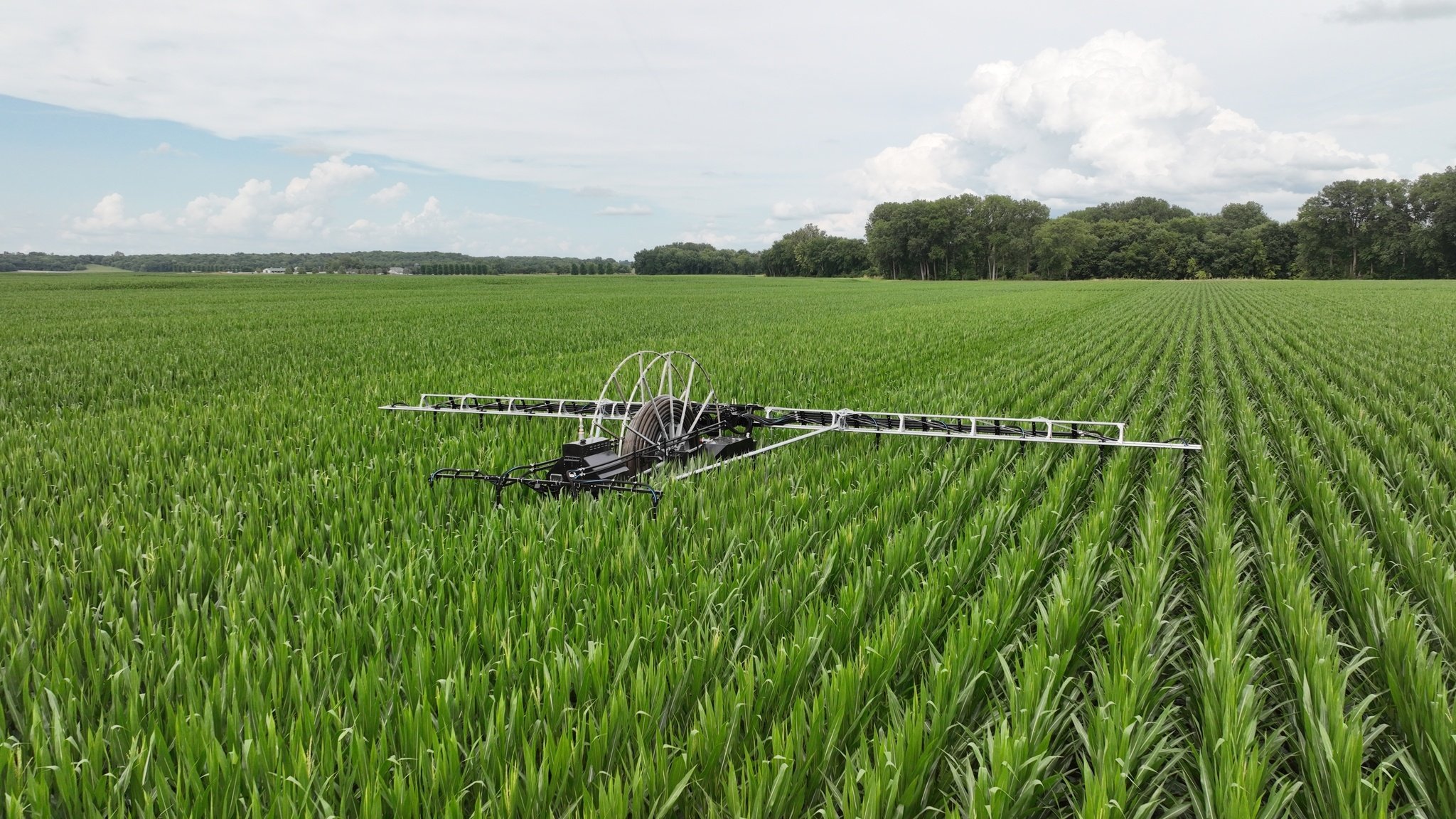
How Von Hardenberg Farms is Utilizing an Autonomous Irrigation System to Reduce Costs and Improve Yields
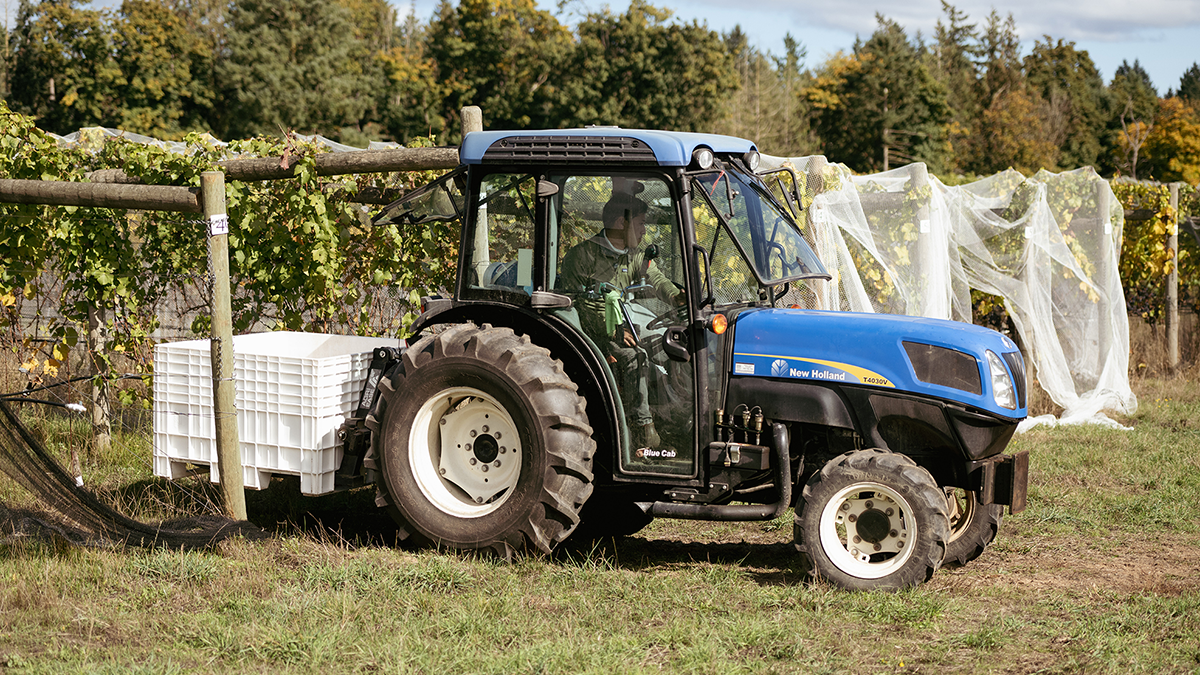
How Unsworth Vineyards is Harnessing Workforce Management Software to Optimize Operations through the BC On-Farm Technology Adoption Program